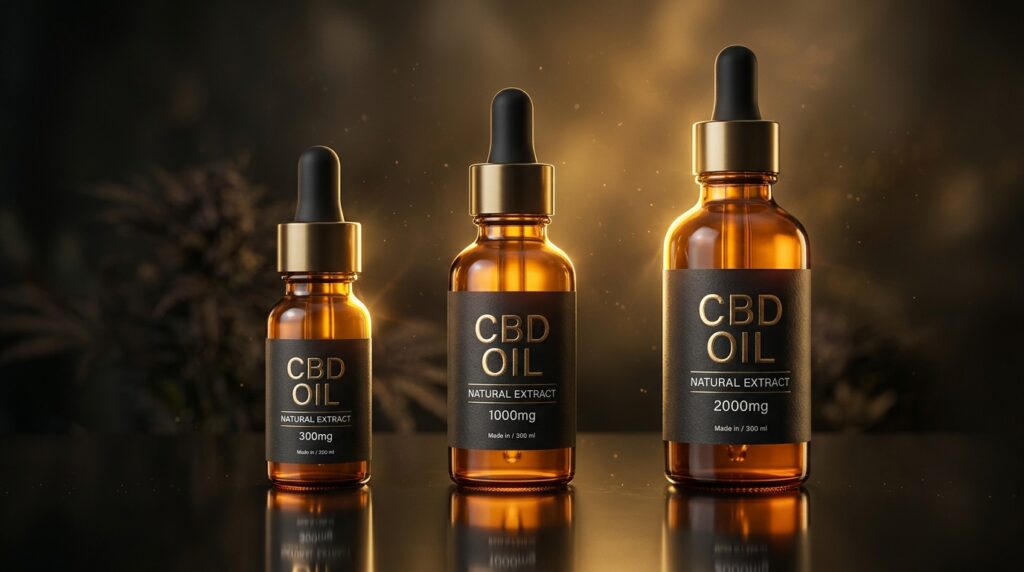
CBD arrives in more shapes than most buyers expect. Oils, capsules, gummies, creams, sprays, and vapes all carry the same compound and behave very differently once they meet the body.
Choosing among them starts with three practical questions: how fast the effect is wanted, how long it should last, and how easy the format is to dose. The comparison below covers the main routes and the trade-offs of each.
The Main Formats Compared
Side-by-side summary
| Format | Typical onset | Typical duration | Dosing precision |
|---|---|---|---|
| Oil under the tongue | 15 to 45 minutes | 4 to 6 hours | High |
| Capsule or softgel | 1 to 2 hours | 6 to 8 hours | High |
| Gummy | 1 to 2 hours | 4 to 6 hours | Moderate |
| Topical | Local, varies | Varies | Low |
| Vape | Minutes | 1 to 3 hours | Variable |
These timings are rough ranges commonly described by manufacturers and reviewers, not measured clinical values, and individuals differ.
Why format changes the experience
CBD taken by mouth goes through the digestive system and the liver, where a large share is broken down before reaching circulation. Reviews of the pharmacology often cite oral bioavailability near 6 percent. Inhaled CBD reaches the blood faster and in larger proportion, with estimates between 11 and 45 percent, though the exposure carries its own risks.
A note on food
Taking oral CBD with a fat-containing meal raises the amount absorbed. The Epidiolex prescribing information reports a several-fold increase in exposure after a high-fat meal. Anyone who changes how they take CBD, with or without food, may notice a different effect from the same dose.
Oils and Capsules
Drops under the tongue
Oil drops give control down to a few milligrams. Holding the oil under the tongue for a minute or so allows some absorption through the lining of the mouth, though how much remains uncertain. The rest is swallowed. The earthy flavor puts some people off.
Capsules for consistency
Capsules deliver the same amount each time and hide the taste. They cost a little more per milligram in some cases, and they do not allow fine adjustment. For people who value routine over flexibility, they are hard to beat.
Choosing between them
A person who expects to adjust the dose, or who wants faster onset, may prefer drops. A person who wants a steady routine and zero fuss may prefer capsules. Many people try both over a few months.
Edibles, Topicals, and Vapes
Gummies and chocolates
Edibles are easy to take and pleasant, which makes them popular. Accuracy can be weaker, because CBD is hard to distribute evenly through candy, and labeled doses sometimes differ from tested ones. Sugar content and child safety deserve attention.
Creams, balms, and patches
Topicals aim at skin and the tissue just below. Systemic absorption is thought to be low, so they suit a defined spot. Transdermal patches are designed to pass CBD into the bloodstream, and evidence on their performance is limited. Skin patch tests on a small area first help to rule out irritation.
Vaping and its risks
Vaping CBD delivers it quickly, and the format brings extra concerns. In the 2019 outbreak of e-cigarette or vaping product use-associated lung injury (EVALI), the CDC recorded 2,807 hospitalized cases or deaths, including 68 deaths, by February 2020. Vitamin E acetate, found in many illicit THC cartridges, was identified as a key culprit. Not every case involved CBD, and the episode showed how unregulated vape products can cause harm.
Prescription and Regulated Alternatives
Epidiolex
Epidiolex is the one FDA-approved CBD product in the United States. It is a prescription oral solution for certain seizure disorders, with doses set by weight. Retail oils are not interchangeable with it.
Combination medicines
Nabiximols, a mouth spray containing CBD and THC, is approved for multiple sclerosis spasticity in several countries. It is not available as a standard prescription in the United States. The existence of approved cannabinoid medicines shows how much regulated products differ from supplements.
Talking with a clinician
A doctor or pharmacist can help when a medical condition is involved, when other medications are in use, or when a prescription option might fit better than a retail product.
Choosing With Your Routine in Mind
Questions to settle it
- Does the effect need to start quickly?
- Will the dose need adjusting?
- Is taste a deal breaker?
- Does the routine allow for a daily capsule?
- Is a specific area the target?
A simple decision path
Fast onset and flexible dosing point toward oil drops. Routine and precision point toward capsules. A single sore area points toward a topical. Inhaled products warrant the most caution.
Reassess after a month
After four weeks, a quick review of whether the format fits the routine tells more than the first impression did. Changing formats later costs little.
Final Thoughts
Each CBD format trades speed, precision, and convenience in a different way, and the best fit depends on how the product will actually be used. A month of consistent use shows whether the choice works.